Find A Ham Radio for Your Next Step
Practical guides for listening, learning, and choosing your next radio.
Explore beginner ham radios, shortwave receivers, SDR equipment, and antenna projects. Start with the type of listening or operating you want to do, then compare features, setup requirements, and limitations.
New to radio? Start with the beginner guide below, or explore the latest tutorials.
Ham Radio Guides: Where to Start
Choose a starting point
- Beginner ham radio buying guide — understand handhelds, bands, and useful features.
- Budget shortwave radios — compare portable receivers for broadcasts and SSB.
- SDR receivers and computer-based listening — explore USB receivers and setup requirements.
- Scanner antennas and amplifier considerations — understand reception trade-offs.
- Radio tutorials and equipment guides — browse recent articles and projects.
Match the radio to your goal
A VHF/UHF handheld can suit local amateur radio activity where compatible stations or repeaters are available. An HF transceiver serves a different purpose, while a shortwave receiver or receive-only SDR lets you explore signals without buying a transmitter.
Compare the whole setup
Consider antennas, compatible modes, controls, power options, software, and accessory costs. Transmitter power alone does not guarantee range or clear audio: terrain, antenna placement, interference, and propagation also matter.
The equipment summaries below are starting points for comparison, not claims that every model has been tested side by side.
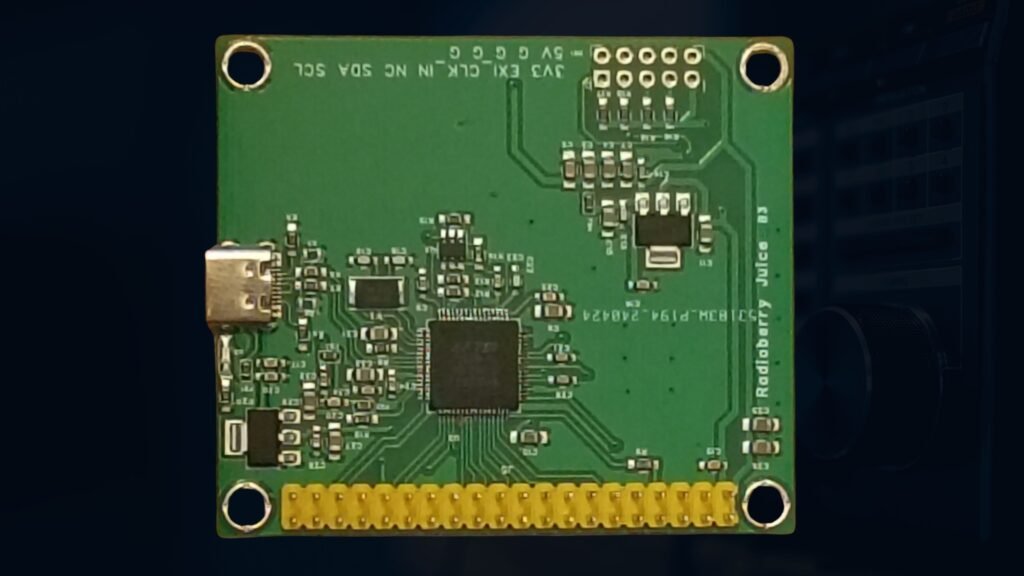
Radioberry Juice USB Interface
Want to use a compatible Radioberry setup from a computer? The Radioberry Juice board provides a USB interface for the project, making it an option for operators who enjoy building and configuring an SDR station rather than buying a finished desktop radio.
Check the board revision and current software instructions before ordering. Our Radioberry USB setup guide for Windows walks through the connections and configuration.
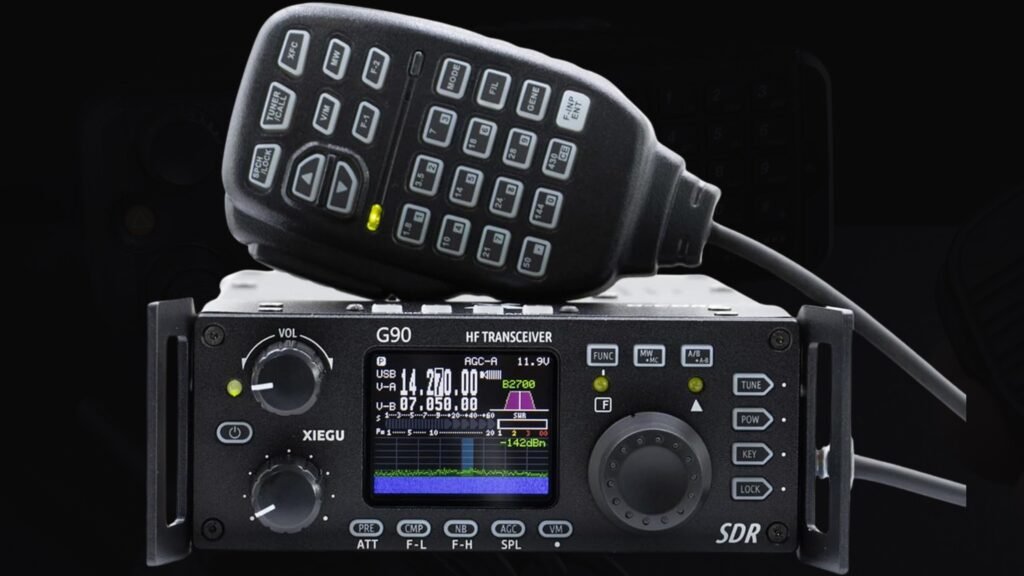
Xiegu G90 HF Transceiver
The Xiegu G90 HF transceiver is a practical model to compare if you want to explore amateur HF bands in a compact station. Its built-in automatic antenna tuner and detachable control head are useful features when space and portability matter.
- Transmit power: up to 20 watts on SSB/CW.
- Receive coverage: 0.5–30 MHz; transmitting is on supported amateur bands.
- Station features: automatic antenna tuner, color spectrum display and detachable head.
Best suited to: operators planning a compact HF setup rather than local VHF/UHF handheld use. Allow for a suitable antenna, DC supply and any computer interface you need. The small display and lower output than a 100-watt desktop radio are worth weighing against its size.
Interested in receive-only monitoring? Read the Uniden SDS200 scanner guide and check local system compatibility before choosing equipment.
Want PC control and a larger software display? Follow the Xiegu G90 and HDSDR setup tutorial, including the required connections and software.
SDR Receivers for Computer-Based Listening
A software-defined radio uses software for parts of the receiving and signal-processing workflow. USB receivers let you explore radio with a computer, but frequency coverage, driver support, antennas, and available modes vary by model.
The USB receivers below are listening devices, not transmitting amateur radio stations. Explore the Radioberry PC interface project for a different SDR setup, or visit SDR listening resources at Ham Radio Sounds.
RTL-SDR Blog V4
The RTL-SDR Blog V4 is a USB receiver for exploring shortwave, VHF and UHF signals on a computer. Its built-in HF upconverter makes it especially worth comparing if you want to move between shortwave listening and higher-frequency signals without a separate upconverter.
Nooelec NESDR Mini
The Nooelec NESDR Mini offers a simple way to try computer-based radio listening. It is a candidate for experimenting with broadcast FM, local analog signals and other compatible VHF/UHF reception using suitable software and antennas. It’s a useful starting point for learning SDR’s.
Nooelec HF Bundle
The Nooelec NESDR SMArt HF Bundle combines an SDR receiver with a Ham It Up upconverter for broader listening. It suits someone who wants to explore HF broadcasts and amateur-band signals as well as VHF/UHF, and does not mind connecting and configuring separate components.
RTL-SDR Blog V3 Receiver
The RTL-SDR Blog V3 receiver remains useful to compare when you want a familiar USB SDR platform for experimenting with antennas and software. It supports VHF/UHF listening through its tuner and HF reception through a separate direct-sampling path.
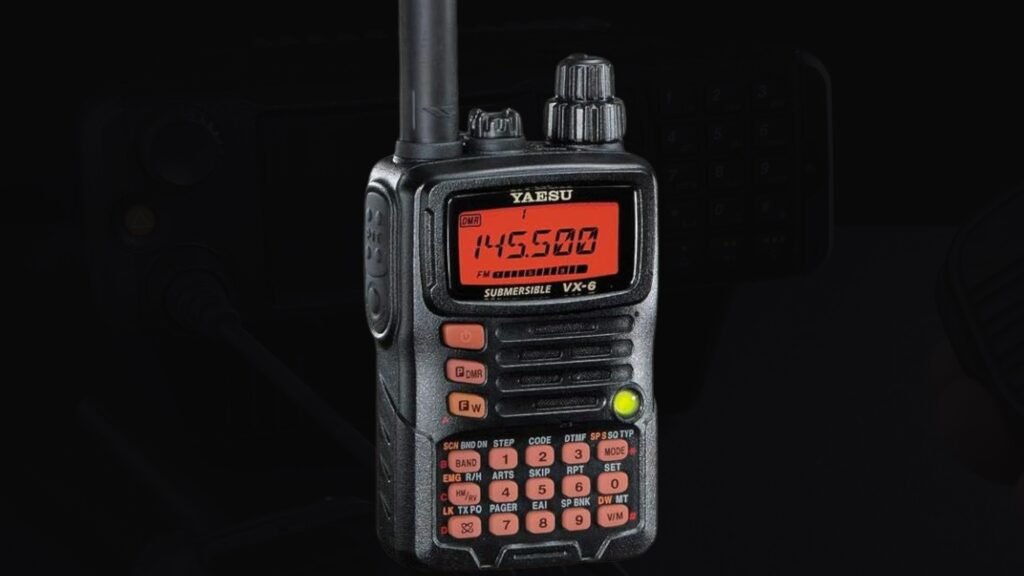
Yaesu VX-6R Handheld Radio
The Yaesu VX-6R is a compact analog FM handheld to consider for local amateur radio contacts and outdoor carry. It combines amateur-band transmission with wider receive coverage, so you can use one device for compatible local conversations and additional listening.
- VHF/UHF output: up to 5 watts on the 144/430 MHz bands.
- US-version extra band: 222 MHz operation at up to 1.5 watts.
- Outdoor design: Yaesu specifies JIS7 submersibility; follow its manual for seals, covers and care.
Best suited to: operators who want a small FM handheld with documented outdoor protection. Confirm the regional version, active local repeaters and battery accessories. Wide receive coverage does not mean it transmits everywhere it can tune, or that it decodes digital trunking systems.
Still choosing your first handheld? Compare our four ham radios to buy now.
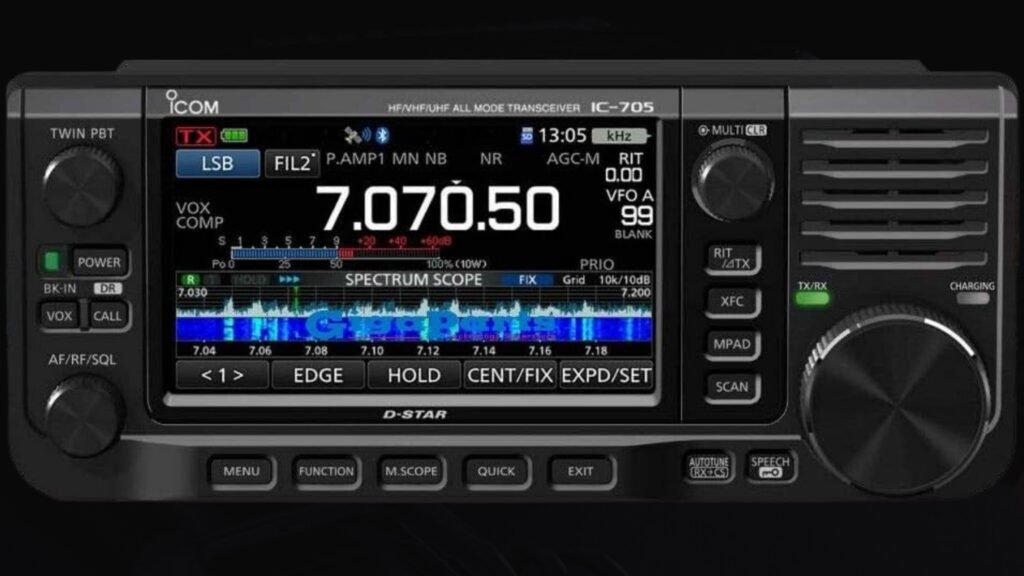
Icom IC-705 Portable Transceiver
The Icom IC-705 is a portable multimode transceiver for operators who want HF, VHF and UHF in one compact setup. Its touchscreen and spectrum display help you explore band activity, while its low-power operation makes antenna choice and power planning central to the experience.
- Amateur bands: HF plus 50, 144 and 440 MHz.
- Output: up to 5 watts with the BP-272 battery or 10 watts from a 13.8V DC supply.
- Modes: includes SSB, CW, AM, FM, RTTY and D-STAR DV.
Best suited to: portable operators who value multiple bands and modes over high transmit power. Plan suitable antennas for the bands you want, charging arrangements and any required matching equipment. It is a different purchase from a simple local-FM handheld or a receive-only USB dongle.
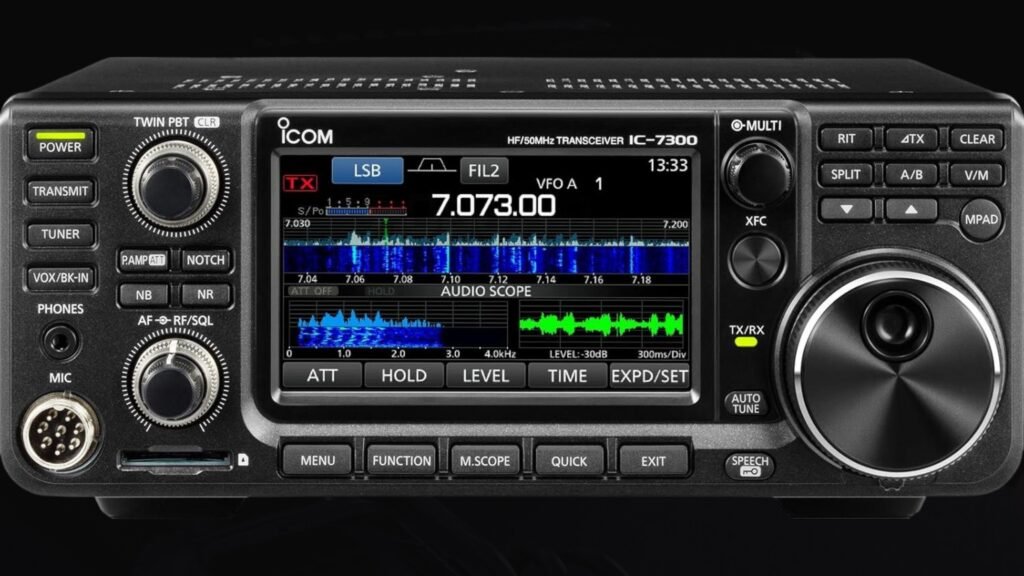
Icom IC-7300 Desktop HF Radio
The Icom IC-7300 is a desktop HF/50 MHz transceiver for building a station around a dedicated radio rather than a handheld or computer dongle. Its direct-sampling receiver, touchscreen and spectrum display give you a visual way to find and investigate activity across a band.
- Amateur coverage: HF and the 50 MHz band.
- Maximum output: 100 watts on SSB/CW/FM/RTTY; 25 watts on AM.
- Station features: built-in automatic antenna tuner and color touchscreen spectrum display.
Best suited to: operators with room for a desktop station and an appropriate antenna installation. Budget for the DC power supply, feed line and accessories your operating style needs. These specifications refer to the original IC-7300; check that a listing is not a different model or bundle.
Using These Radio Guides
Compare who a product suits, what it cannot do, and which accessories or setup steps it needs. Distinguish manufacturer specifications from direct testing when weighing a recommendation.
As an Amazon Associate, we earn from qualifying purchases. Read the about and editorial policy and the affiliate disclaimer, send a correction or question, or browse the latest radio guides.